MLB game length
How long is a baseball game? MLB average time and ballpark planning
A nine-inning MLB game averaged 2 hours 38 minutes in 2025. Baseball has no fixed game clock, so an individual game can finish sooner or run much longer. For an in-person trip, plan for about three hours of game time plus entry, food, transit, and any time you want to spend exploring the ballpark.
Sources and resources
- Official MLB 2025 average game time — MLB's completed-season figure of 2 hours 38 minutes for the average nine-inning game in 2025.
- Official MLB pitch-timer rule — MLB's current limits between pitches, batter-ready rule, disengagements, and violations.
- Official MLB between-innings timing — MLB's regular-season and postseason break lengths between innings and during pitching changes.
- Official MLB regulation-game glossary — MLB's rules for nine innings, early endings, weather-shortened games, and extra innings.
How long does an MLB game usually last?
The average nine-inning MLB game lasted 2 hours 38 minutes in 2025. That is a useful planning number, not a promised finish time.
Baseball is organized by outs and innings instead of a game clock. A quick pitchers' duel can end well below the average, while a high-scoring game, delay, or extra innings can push the finish much later.
- 2025 nine-inning MLB average: 2 hours 38 minutes.
- Practical game-time budget: about three hours.
- Actual duration: shorter or longer depending on the game.
Why baseball does not have a fixed end time
An MLB game is scheduled for nine innings, with three outs for each team in each inning. The teams must record those outs; the clock does not end the game.
A home team that leads after the top of the ninth does not bat again, and a home team that takes the lead in the bottom of the ninth wins at once. Those endings can remove part or all of the final half-inning.
What makes a baseball game take longer?
More batters, baserunners, runs, pitching changes, replay reviews, injuries, and mound visits all add time. Weather can stop play for far longer than an ordinary inning break.
A tied score after nine innings adds full extra innings until one team wins. MLB has no fixed extra-inning cap, so the possible finish time remains open.
- High-scoring innings and long plate appearances.
- Pitching changes, replay reviews, injuries, and mound visits.
- Rain or another on-field delay.
- Extra innings after a tie.
How the MLB pitch timer affects game length
MLB introduced the pitch timer in 2023 to cut dead time. The current limit is 15 seconds with the bases empty and 18 seconds with runners on base, and a batter must be in the box and alert by the eight-second mark.
The timer does not cap the whole game. It controls the time between pitches, while the number of batters, pitches, runs, and innings still shapes the final duration.
- 30 seconds between batters.
- 15 seconds with the bases empty.
- 18 seconds with runners on base.
- Batter ready by eight seconds.
How much time do extra innings add?
There is no standard number of minutes for an extra inning. Each extra frame gives both teams a turn unless the home team scores the winning run first.
Regular-season extra half-innings start with an automatic runner on second base, which helps create a result sooner. Postseason extra innings start with empty bases and can run longer.
Can a baseball game finish in less than two hours?
Yes. A low-scoring game with quick innings and few interruptions can finish in under two hours. MLB recorded several such nine-inning games in the pitch-timer era.
A game can also end early because the home team skips the bottom of the ninth, wins during that half-inning, or because weather and regulation-game rules produce an earlier final result.
How much time should you plan at the ballpark?
For the game itself, allow about three hours. Add the time you want before first pitch for security, food, batting practice, photos, or a walk around the park, then add your trip out after the final out.
Gate times and transit vary by ballpark and event. Check the club's current information before you leave, especially for Opening Day, giveaways, rivalry games, playoffs, and special events.
- Arrive 60 to 90 minutes early if you want time to explore.
- Budget about three hours for the game.
- Add parking, transit, security, and postgame exit time.
Keep the game, however long it lasted
Duration is part of the story. A fast afternoon game feels different from a rain delay, a walk-off, or a late extra-inning finish.
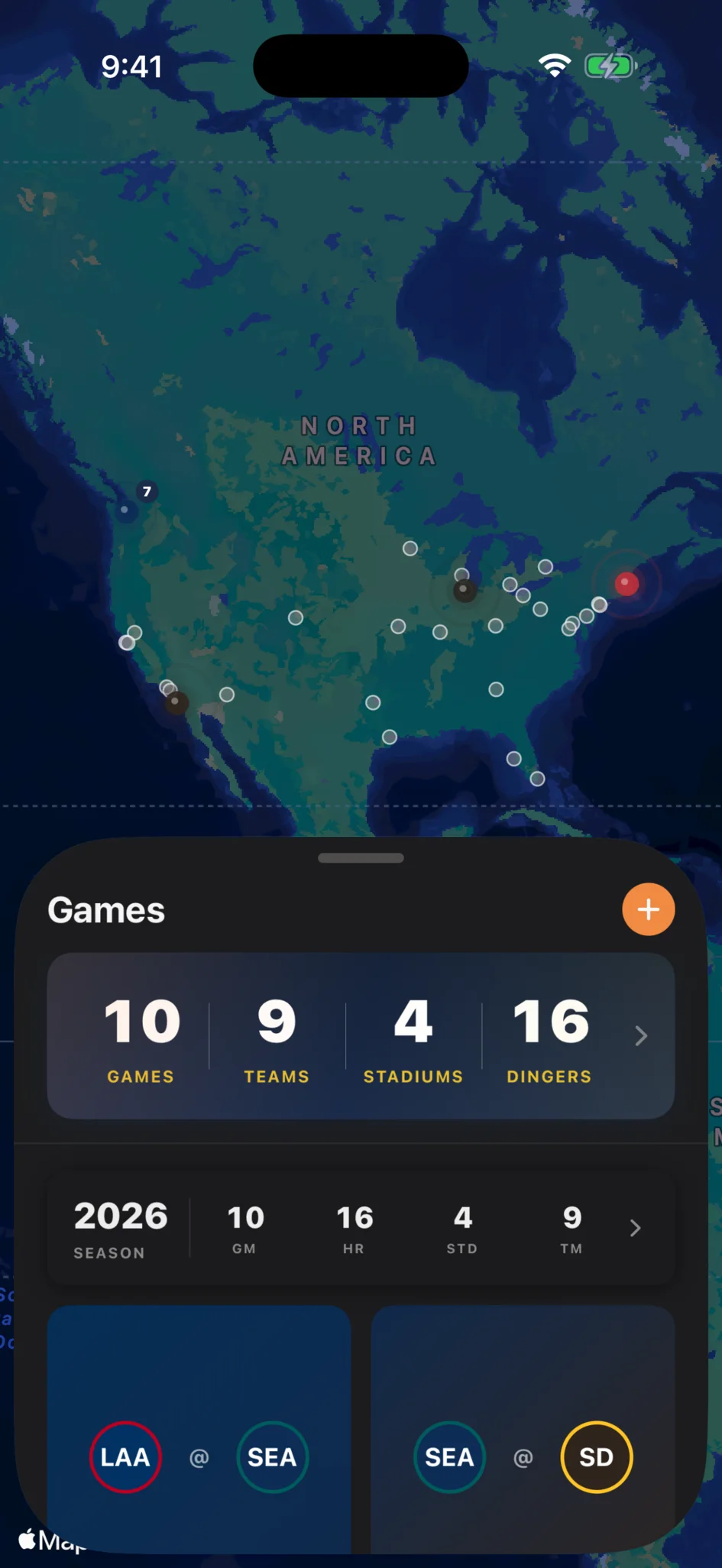
Log the completed game in Gamebook with its final score, ballpark, section, row, seat, players, home runs, companions, photos, and memory. It becomes part of your team record, ballpark passport, and lifetime baseball history.
Common questions
How long is a baseball game?
A nine-inning MLB game averaged 2 hours 38 minutes in 2025. An individual game can be shorter or longer because baseball has no fixed game clock.
How much time should I allow for an MLB game?
Allow about three hours for the game itself. Add time for entry, food, exploring the park, parking or transit, and leaving after the final out.
Can an MLB game last more than four hours?
Yes. Extra innings, high scoring, pitching changes, replay reviews, injuries, or weather delays can push a game beyond four hours.
Can a baseball game finish in under two hours?
Yes. A quick, low-scoring nine-inning game with few interruptions can finish in under two hours.
How long is one baseball inning?
An inning has no fixed time. Using the 2025 nine-inning average gives about 18 minutes per inning, but individual innings can be much shorter or longer.
Does the pitch clock limit the total game time?
No. The pitch timer limits time between pitches and batters, but it does not set a final game clock.
How long does an extra inning take?
There is no set length. Both teams normally bat in an extra inning unless the home team scores the winning run first.
How can I track a baseball game I attended?
Log the completed game in Gamebook with its final score, ballpark, seat, players, home runs, companions, photos, and memory.